
In baking production, baking trays must be thoroughly cleaned and dried as quickly as possible after washing before they can re-enter the production process. For bakeries and food factories that reuse large numbers of baking trays daily, the key to how to clean baking trays lies not only in removing grease, dough, and baking residue, but also in using appropriate washing and drying equipment to ensure the trays are ready for reuse.
Why Do Baking Trays Need to Be Thoroughly Dried After Cleaning?
After spray washing and rinsing, water droplets may remain on the surface, edges, and in the holes of the baking trays. If they are stacked or returned to the production line immediately, this moisture will increase subsequent processing time and may also affect the trays' readiness for reuse.
Therefore, for baking facilities operating on a continuous production basis, cleaning and drying are best handled as a continuous process. LONKIA's baking cleaning solution combines tray washing, rinsing, and drying, and can be configured as a standalone or in-line system depending on the production process.
How to Clean Baking Trays and Remove Water Effectively?
1. Remove Residues with a Spray System
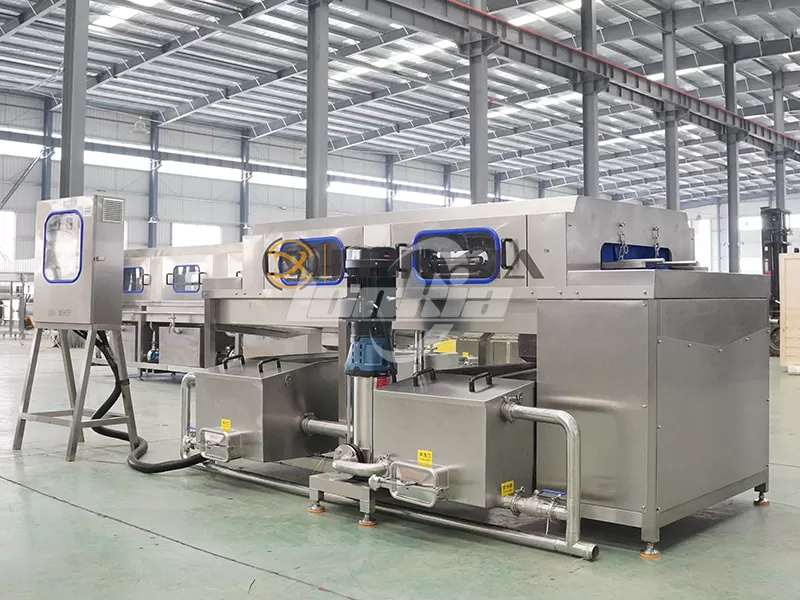
The trays first enter the baking tray cleaner's washing zone, where multi-directional sprays remove dough, grease, and other residues from the surface. The cleaning and rinsing zones of the Tray Washer are separated, which minimizes the impact of water from the initial cleaning stage on the subsequent rinsing process.
2. Follow-up Rinsing
After the main cleaning cycle, the baking trays enter the baking tray cleaning machine's rinsing zone to further remove surface residues and cleaning solution, preparing them for the drying stage. For trays of different sizes and configurations, an adjustable guide system ensures proper conveyance.
3. Final drying is achieved using forced air
The final drying module is what truly determines the condition of the trays upon discharge. LONKIA baking tray cleaning machine employs air circulation and forced-air blowing to remove moisture from the cleaned trays, accommodating various tray structures such as flat-bottomed, perforated, and corrugated trays.
How Does A Baking Tray Cleaner Meet Actual Production Needs?
When selecting a baking tray cleaner, customers should provide key details such as tray length, width, structure, material, and the number of trays to be processed per hour. If a facility uses multiple tray sizes simultaneously, it is also necessary to confirm whether the guidance and conveyor systems can be adjusted.
The LONKIA baking tray cleaner has a processing capacity ranging from 100 to 2,000 trays per hour and supports equipment configuration based on tray specifications. The washing water temperature can also be adjusted to meet the cleaning requirements of different trays.
Summary
For baking businesses requiring continuous production, rather than addressing how to clean baking trays and how to dry baking trays separately, it is more efficient to integrate washing, rinsing, and drying into a single continuous process. The right baking tray cleaning machine can reduce manual handling and repetitive cleaning tasks while ensuring that cleaned trays return to the production line more quickly.
If your baking trays have issues such as heavy grease buildup, significant dough residue, inconsistent sizes, or noticeable residual water after washing, we can configure a customized cleaning and drying solution based on actual tray samples and your production capacity requirements.
