
In food processing, plastic trays are frequently used for transporting raw materials, conveying semi-finished products, and handling finished goods. After repeated use, oil stains, food residue, dust, and other contaminants easily accumulate on the surface and in the grooves of the pallets. Relying solely on manual rinsing not only limits cleaning speed but also leads to inconsistent cleaning results among different operators. Therefore, for food processing companies that require frequent turnover of plastic pallets, choosing the right automatic pallet washer is not simply a matter of focusing on the equipment's appearance, but rather on whether the cleaning system is truly suited to their production processes.
What Configurations Should Be Considered for Pallet Washers Used in Food Processing?
1. Multi-stage Cleaning System
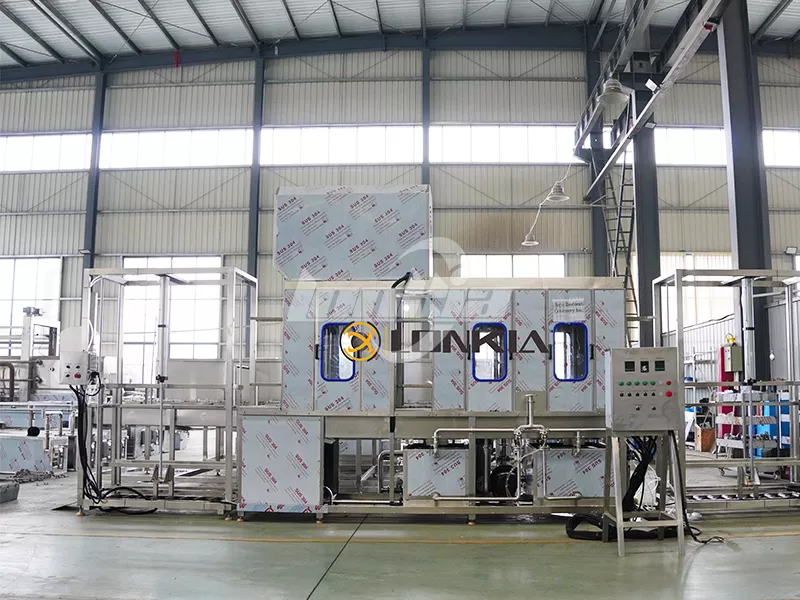
Contaminants on pallets vary, so a single water stream struggles to meet all cleaning needs. LONKIA plastic pallet washers employ a continuous process comprising pre-wash, main wash, rinse, and drying stages.
The pre-wash stage first removes larger particles and surface contaminants adhering to the pallets; the pallets then enter the main wash area, where high-pressure spraying, rotating nozzles, and warm water or detergent further treat grease and residues; the rinse stage focuses on removing detergent and residual contaminants. This phased design allows each cleaning zone to perform a specific task, improving overall cleaning consistency.
2. High-Pressure Spraying and Nozzle Layout
Food processing trays typically feature holes, edges, and grooves, which can be difficult to clean manually. Therefore, when purchasing equipment, it is essential to pay close attention to the number of nozzles, their installation locations, and the spray coverage area.
The automatic pallet washer uses high-pressure water jets and rotating nozzles to rinse the tray surfaces and crevices from various angles, ensuring that the water flow makes full contact with contaminated areas. For stubborn grease, warm water and detergent can be used in combination for more effective cleaning.
Filtration and Conveyor Systems Are Equally Important
Filtration Systems Ensure a Stable Cleaning Process
During the cleaning process, large amounts of debris enter the wash tank. Without an effective filtration and recirculation design, impurities may re-adhere to the trays and increase maintenance demands on water pumps and piping. Therefore, equipment equipped with a filtration and recirculation system is better suited for continuous tray washing operations.
Automated Conveying Reduces Manual Intervention
The automated conveying system sequentially feeds trays into different cleaning zones, creating a continuous process that integrates loading, washing, rinsing, and drying. For food processing plants requiring continuous tray turnover, this configuration reduces manual handling and facilitates seamless integration with upstream and downstream equipment.
What Parameters Should Be Verified Before Purchase?
Before selecting an automatic pallet washer, customers are advised to provide information in advance regarding tray dimensions, hourly washing capacity, types of contamination, whether hot water washing is required, whether drying is needed, and the on-site conveyor direction. Since tray specifications and production processes vary, the washing zones, conveyor structure, and drying configuration must be adjusted accordingly.
LONKIA can provide customized washing solutions based on tray specifications and actual production needs, ensuring the equipment integrates seamlessly with existing food processing workflows.
Conclusion
An automatic tray washer designed for food processing must address practical challenges such as cleaning consistency, hard-to-clean areas, continuous conveying, and post-cleaning handling. From multi-stage washing and high-pressure spraying to filtration cycles and automatic drying, each configuration affects the final performance. When making a purchase, selecting a solution based on your specific tray specifications and production cycle will ensure you obtain a cleaning solution that is truly suited to your production line.
