
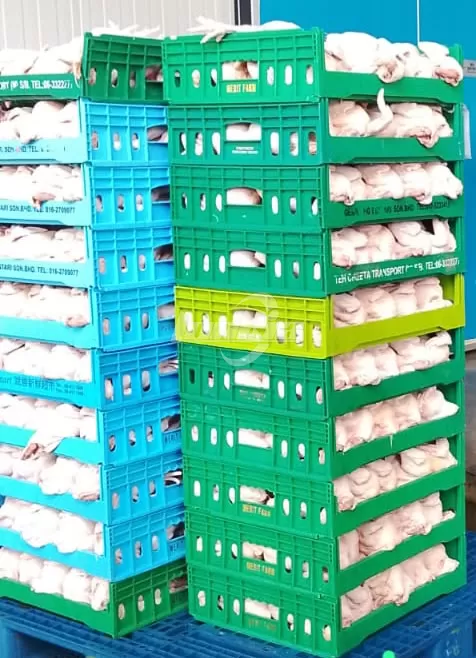
During poultry farming, slaughtering and processing, and the transport of chicken cages, feces, feathers, and other residues easily accumulate on the surfaces of the cages. When purchasing chicken cage washing equipment, it is crucial to consider how to ensure effective cleaning while reasonably controlling water consumption and daily operating costs.
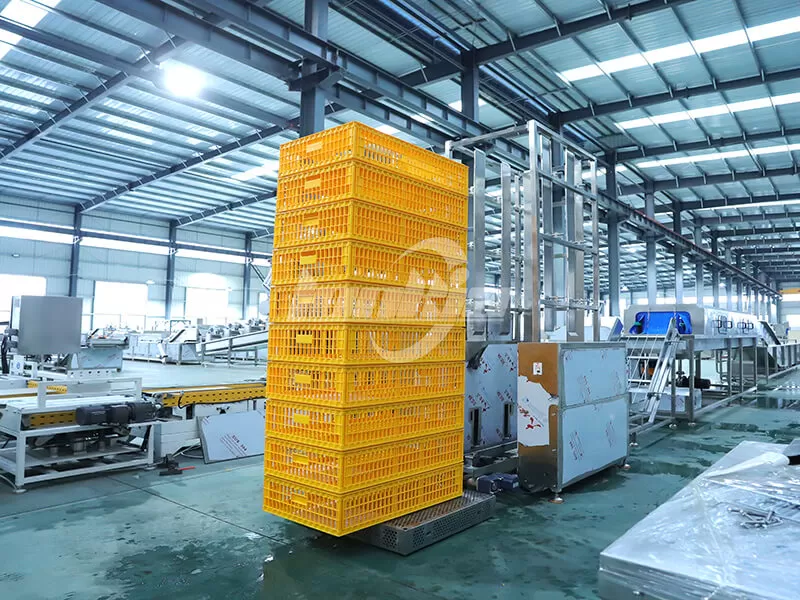
Chicken cage washing machines utilize a combination of multi-stage spray washing and a recirculating water system to ensure the efficient use of water across different cleaning stages. Understanding how they work helps users determine whether the equipment configuration meets their actual production needs.
How Does the Water Recirculation System in a Chicken Crate Washer Work?
1. Pre-wash: Prioritizing the Removal of Surface Contaminants
After entering the chicken cage washing machine, the chicken cages first undergo the pre-wash stage. The spray water is primarily used to rinse away loose feces, feathers, and other residues from the surface, thereby reducing the cleaning burden on the subsequent main wash stage.
Because the pre-wash stage handles a large amount of contaminants, water quality management is especially important during this phase. Proper control of filtration and wastewater discharge can prevent impurities from continuously accumulating in the system.
2. Main Wash: Focus on Removing Adhered Contaminants
After the pre-wash, the chicken cages enter the main wash area. The poultry crate washer uses multi-angle nozzles to spray water, combined with appropriate water pressure, temperature, and detergent, to remove adhered contaminants from the cage mesh, bottom, and joints.
The effectiveness of the main wash depends not only on water pressure but also on nozzle layout, cage structure, and conveyor speed. Adjusting cleaning parameters based on the actual degree of contamination is essential to balance cleaning quality and processing efficiency.
3. Rinsing: Removing Residues and Improving Cleaning Results
After the main wash is complete, the chicken cages enter the rinsing stage, where relatively clean water is used to flush away residual dirt and detergent. The quality of the rinse water directly affects the final cleaning results; therefore, the flow direction must be properly arranged.
Water Flows From the Rear to the Front—How Can It Be Recycled?
Chicken cage washing machines can employ a staged water recirculation design, diverting relatively clean water from the rear to the front for reuse. For example, some of the water discharged from the rinsing area can be used for pre-washing, thereby reducing the demand for fresh water.
This approach leverages differences in water quality across different stages, allowing relatively clean water to handle preliminary cleaning tasks rather than relying on a fresh water supply for every step.
It is important to note that recycling does not mean water can be reused indefinitely. The chicken crate washer still requires filtration, drainage, and appropriate water replenishment based on the degree of contamination to maintain consistent cleaning performance.
How Much Water Does Each Cage Require in a Chicken Cage Washer?
Under normal cleaning conditions, the water consumption per chicken cage is approximately 2–4 L. Actual water consumption is influenced by factors such as the degree of soiling, cleaning parameters, and hygiene requirements.
Purchasers should distinguish between the water flow rate within the recirculation system, the reference water consumption per cage, and the actual amount of fresh water required to replenish the system during operation. When evaluating operating costs, factors such as wastewater discharge, filter maintenance, and necessary water replacement should also be considered.
How to Choose the Right Poultry Crate Washer?
When selecting a chicken crate washer, it is recommended to focus on the following aspects:
- Cleaning Effectiveness: Do the nozzles cover the inner and outer surfaces of the chicken cages, as well as the mesh areas?
- Recirculating Water Design: Does the system include appropriate filtration, water replenishment, and drainage arrangements?
- Cleaning Process: Do the pre-wash, main wash, and rinse stages meet actual hygiene requirements?
- Processing Capacity: Does the hourly throughput match the daily chicken cage turnover requirements?
- Ease of Maintenance: Are the water tank, filtration units, nozzles, and water pump easy to inspect and clean?
If chicken cages require disinfection after cleaning, further confirmation is needed as to whether a separate disinfection process should be configured. Cleaning is primarily responsible for removing contaminants and cannot directly replace validated disinfection procedures.
Conclusion
The recirculating water system of a chicken cage washing machine not only affects water costs but also influences the process sequencing of the three cleaning stages. By properly configuring the pre-wash, main wash, rinse, and water recirculation systems, a better balance can be achieved between cleaning effectiveness and operating costs.
LONKIA can provide customized chicken cage washing equipment solutions based on cage dimensions, contamination levels, processing capacity, and on-site process requirements. Conducting washing tests using actual chicken cages prior to purchase helps further confirm whether the equipment configuration and operating parameters meet production requirements.
