
Before installing an egg tray washer, in addition to confirming the equipment dimensions, you must also inspect the on-site layout, water supply and drainage systems, power supply conditions, and how the equipment will integrate with the existing production line. Insufficient preparation in the early stages may result in issues such as mismatched conveyor heights, poor material flow, or on-site conditions that do not meet requirements once the equipment arrives at the facility. Verifying key details in advance helps shorten installation and commissioning time, allowing the equipment to begin stable operation more quickly.
Confirming Installation Space and Production Line Layout
1. Verify Equipment Dimensions and Maintenance Space
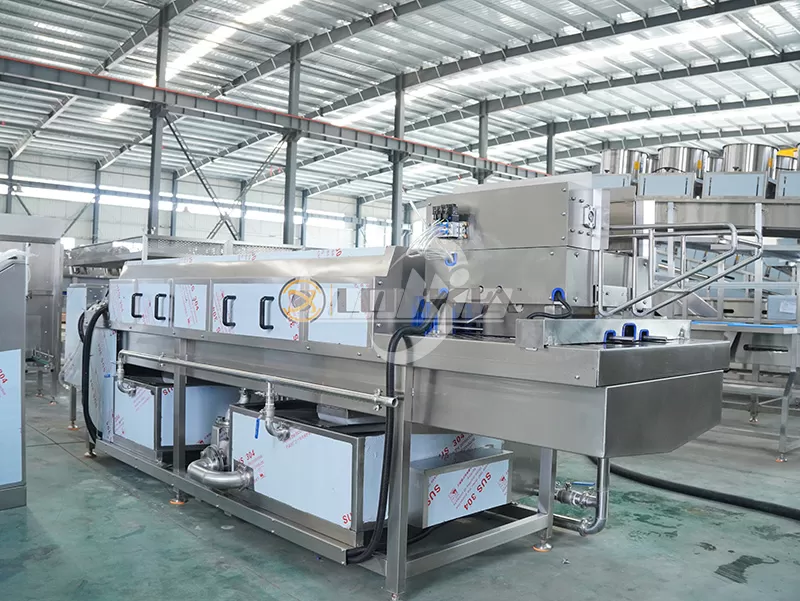
Before installation, request the equipment's external dimension drawings and layout diagrams from the supplier to confirm the machine's length, width, and height, as well as the locations of the feed and discharge ports. Egg tray washers typically consist of sections such as the feed conveyor, pre-wash, main wash, rinse, and discharge; some configurations also include an air-drying module. Different configurations affect the overall dimensions of the equipment, so the final confirmed model and technical drawings should serve as the basis for planning.
In addition to the installation space for the egg tray washing machine, adequate space should be reserved for operational aisles and maintenance areas to ensure that staff can inspect nozzles, clean filters, and perform routine maintenance on the conveyor system.
2. Ensure Seamless Integration of the Equipment with the Existing Production Line
If the egg tray washing machine needs to be connected to egg grading, packaging, or tray recovery processes, verify the conveyor heights, operating directions, and processing cycles of upstream and downstream equipment in advance. A well-planned layout can reduce tray backlogs, manual handling, and conveyor interruptions, allowing the washing equipment to integrate more smoothly into the existing production process.
Check Water Supply, Drainage, and Heating Conditions
Egg tray washers remove egg liquid, broken eggshells, and other residues through multi-angle spraying and staged washing; therefore, a stable water supply and reliable drainage conditions are crucial.
Before installation, verify that the water supply connections, water pressure, drain pipe diameter, and on-site drainage capacity meet the equipment's requirements. If the equipment is equipped with a recirculating filtration system, also confirm the location of the water tank, the filter cleaning method, and water replenishment requirements to prevent the accumulation of impurities from affecting the normal operation of the nozzles and recirculation pump.
Additionally, verify whether the egg tray washing machine uses electric or steam heating and prepare the corresponding utility connections in advance. Refer to the technical specifications provided by the supplier for specific heating methods, temperature ranges, and supporting facility requirements.
Verify Power Supply Parameters and Safety Requirements
1. Confirm Voltage, Frequency, and Number of Phases
Electrical conditions may vary from one facility to another. The purchaser should confirm the egg tray washer's required voltage, frequency, number of phases, and installed power in advance, and verify that the on-site power supply meets these requirements. Do not assume that the equipment can be directly connected to the existing power supply based solely on the voltage marked on the equipment.
2. Prepare Electrical Connection Requirements in Advance
Before installation, confirm the power connection locations, protective devices, installation space for the control cabinet, and grounding requirements. If the equipment needs to be connected to other conveyors or production line control systems, clarify the control interfaces and operating logic in advance to minimize the need for additional modifications after the equipment arrives at the facility.
Confirm Egg Tray Specifications and Washing Process Requirements
The dimensions, structure, and material of egg trays directly affect conveying stability and spray coverage. Before installation, provide the supplier with the actual dimensions of the plastic egg trays used in production, including length, width, height, and groove structure. If the facility uses multiple egg tray sizes, confirm in advance whether a single unit can accommodate them and whether adjustments to conveyor guidance, nozzle positions, or operating speed are required.
In addition, the primary contaminants on the egg trays and post-cleaning usage requirements should be clarified to ensure that configurations such as pre-wash, main wash, hot water rinse, and optional air drying are suitable for actual production. It is important to note that cleaning and disinfection are distinct processing objectives. If the production process requires disinfection, the corresponding equipment configuration, process conditions, and validation requirements should be further confirmed.
Post-Installation Trial Operation and Cleaning Effectiveness Testing
Once the equipment is installed, it should not be immediately put into continuous production. First, conduct inspections and trial runs in accordance with the manufacturer's operating instructions to confirm that the water supply, drainage, heating, circulation pumps, spray system, and conveyor system are all functioning properly.
Next, perform cleaning tests using actual egg trays, focusing on cleaning effectiveness in areas such as grooves and edges, as well as spray coverage in different zones, conveyor stability, and actual processing capacity. If the equipment is equipped with an air-drying module, also verify whether the residual moisture at discharge meets subsequent handling requirements.
LONKIA can provide equipment configuration recommendations based on the customer's egg tray specifications, target processing capacity, and on-site layout. Confirming installation conditions in advance and completing necessary tests before official production helps minimize subsequent adjustments and ensures the equipment better adapts to actual production needs.
Conclusion
Before installing an egg tray washer, it is recommended to carefully verify five key aspects: the installation space and production line layout, water supply and drainage conditions, heating and power requirements, egg tray compatibility, and the post-installation trial operation plan. Confirming these details with the supplier in advance not only helps reduce installation risks but also ensures that the equipment configuration aligns with actual production processes. For egg processing companies planning to introduce automated washing equipment, thorough installation preparation is a crucial step in ensuring the stable operation of the equipment.
