
During egg processing, egg trays—as reusable containers—are highly prone to accumulating egg liquid, feathers, and shell fragments. If not cleaned thoroughly, this not only compromises hygiene but also poses a risk of cross-contamination. Compared to traditional manual cleaning, egg tray washing machines are gradually becoming standard equipment in the industry.
Common Issues with Manual Cleaning
Many customers initially rely on manual methods, but as production volumes increase, the drawbacks gradually become apparent:
1. Low Cleaning Efficiency
Manual cleaning depends on human labor, making it difficult to increase speed; it often becomes a bottleneck, especially in mass production.
2. Inconsistent Cleaning Results
Inconsistent operating standards among workers lead to residual stains or bacteria on some egg trays, affecting overall hygiene levels.
3. Rising Labor Costs
Multiple workers are required to operate simultaneously; in the long term, labor costs far exceed the initial investment in equipment.
4. Difficult-to-Control Hygiene Risks
Egg trays can easily accumulate organic residues during use; if not thoroughly cleaned, they may become a source of contamination.
Core Advantages of the Egg Tray Washing Machine
Compared to manual methods, the egg tray washing machine achieves consistent and efficient cleaning through standardized processes.
1. High-Efficiency Continuous Operation
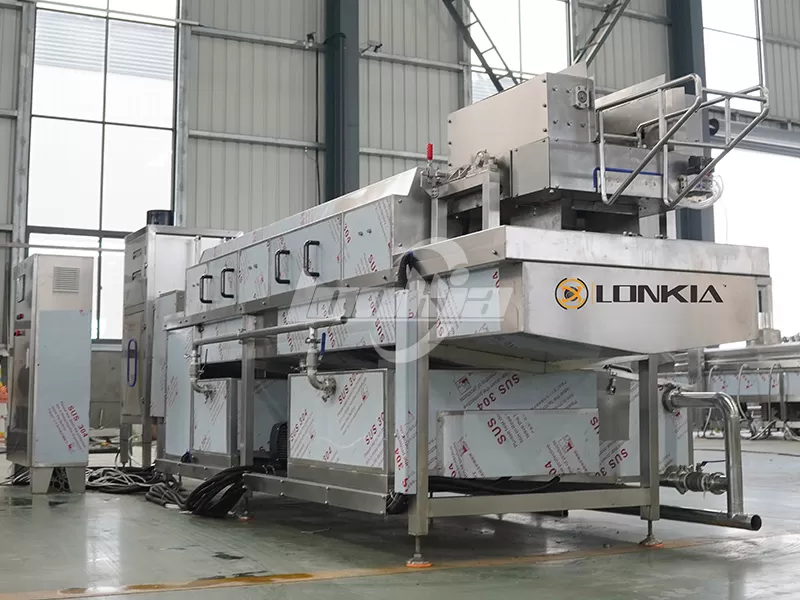
The tray washer machine features a conveyor system combined with a multi-station washing design, enabling continuous operation with a processing capacity of hundreds to thousands of egg trays per hour.
2. Thorough Multi-Stage Cleaning
The standard process includes:
- Pre-rinse
- Main wash (high-pressure spray)
- Disinfection
- Drying
High-pressure water jets and hot water circulation effectively remove egg residue, stains, and bacteria.
3. Consistent and Controllable Cleaning Results
The egg tray washer machine operates using standardized parameters (temperature, pressure, and time), eliminating human error and ensuring consistent cleanliness for every batch of egg trays.
4. Reduced Reliance on Labor
Typically requiring only one operator, the machine significantly reduces manual labor and lowers long-term operating costs.
Cost Comparison: Short-Term Investment vs. Long-Term Benefits
| Comparison Item | Manual Cleaning | Egg Tray Washer |
| Initial Cost | Low | Higher |
| Labor Costs | High | Very Low |
| Cleaning Efficiency | Low | High |
| Cleaning Standards | Inconsistent | Consistent |
| Long-Term Costs | Continuously Increasing | Controllable |
In the long run, the investment in equipment can be quickly recouped through labor savings and increased efficiency.
The Equipment Addresses Customers' Core Pain Points
- Resolves production bottlenecks: Automated cleaning matches the speed of grading and packaging equipment, preventing production interruptions.
- Enhances food safety standards: Standardized cleaning processes effectively reduce bacterial residue, meeting modern food processing requirements.
- Extends egg tray lifespan: Uniform cleaning reduces corrosion and wear, increasing the number of reuses.
Why More and More Companies Are Choosing Automated Solutions
In large-scale production environments, egg tray washing has evolved from a secondary process to a critical one. Automated equipment not only boosts efficiency but also ensures production continuity and consistent hygiene standards.
Equipment manufacturers like Lonkia have optimized structural design and washing systems to strike a balance between stability and practicality, making the equipment better suited to actual production needs.
Summary
For egg processing companies, selecting an egg tray washing machine is not merely an equipment upgrade but an optimization of production processes.
- If you still rely on manual cleaning, You will face efficiency and cost pressures.
- If you switch to automated equipment, You can achieve stable, efficient, and controllable production.
In the long run, egg tray washers not only reduce costs but also enhance overall production competitiveness.
