
For food processing plants, logistics centers, and manufacturing companies that use large numbers of reusable pallets, cleaning efficiency is a key consideration when selecting a pallet cleaning machine. Customers typically ask: How many pallets can a single machine process per hour? How long does it take to clean a single pallet? Can the equipment meet continuous production demands?
In reality, the cleaning time for a single pallet is not a fixed value; it is influenced by multiple factors, including pallet type, degree of contamination, equipment design, cleaning process, and configuration. Understanding these factors can help businesses select a pallet cleaning solution that better suits their production needs.
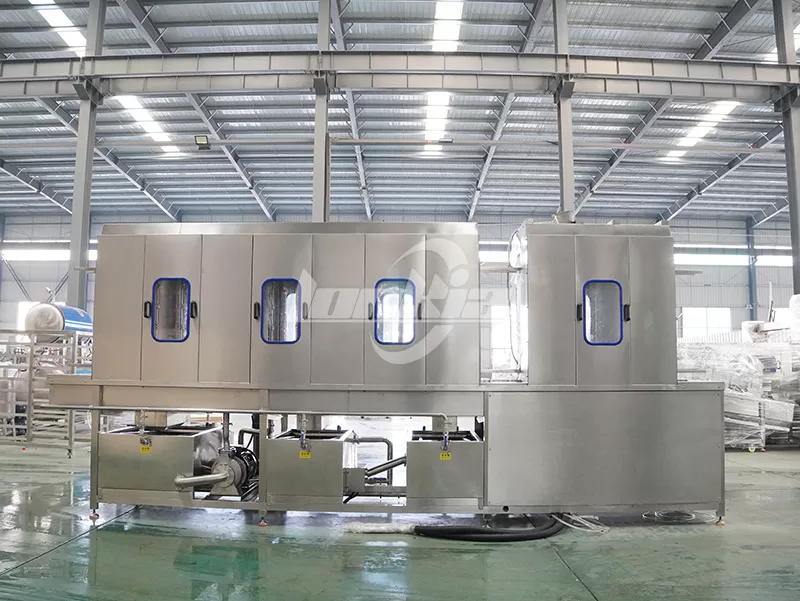
The Cleaning Process of a Pallet Cleaning Machine Determines Processing Time
A professional pallet cleaning machine is typically not just a simple rinsing device; rather, it removes dirt from the surface and crevices of pallets through multiple cleaning steps.
Take Lonkia's pallet cleaning equipment as an example: the equipment typically uses a continuous cleaning process. Once pallets enter the conveyor system, they sequentially pass through the pre-wash, main wash, rinse, and drying stages. The pre-wash stage primarily removes surface impurities such as dust and residues; the main wash stage uses high-pressure water jets and a cleaning system to thoroughly remove contaminants like oil stains and food residues; finally, the rinse and drying stages ensure the pallets meet the requirements for reuse.
The entire pallet washing process is completed automatically by the equipment, eliminating the need for manual scrubbing of each pallet and preventing variations in cleaning results caused by different operators.
What Factors Affect the Cleaning Time for a Single Pallet?
1. Degree of Pallet Contamination
This is one of the key factors affecting cleaning time.
If the pallets are primarily contaminated with dust and general debris, the equipment can complete the cleaning quickly; however, if the pallets are used in environments such as meat processing or food production—where the surface may be coated with grease, protein residues, or stubborn stains—longer cleaning times, higher water temperatures, and stronger spray pressure are required.
Therefore, when selecting a pallet washing machine, it is essential to determine the cleaning configuration based on the pallets' actual operating environment, rather than focusing solely on the machine's speed.
2. Number of Cleaning Zones and Spray Design
The effectiveness of pallet cleaning is closely related to the plastic pallet washer's internal spray structure.
High-quality pallet washing machines typically feature multiple cleaning zones, with nozzles positioned at different angles to cover the top, bottom, and sides of the pallets, ensuring that all areas are thoroughly exposed to the cleaning water flow.
A well-designed nozzle layout not only improves the effectiveness of a single wash cycle but also reduces the need for rewashing, thereby enhancing overall production efficiency. Different machines are configured with varying numbers of washing zones depending on pallet dimensions and cleaning requirements.
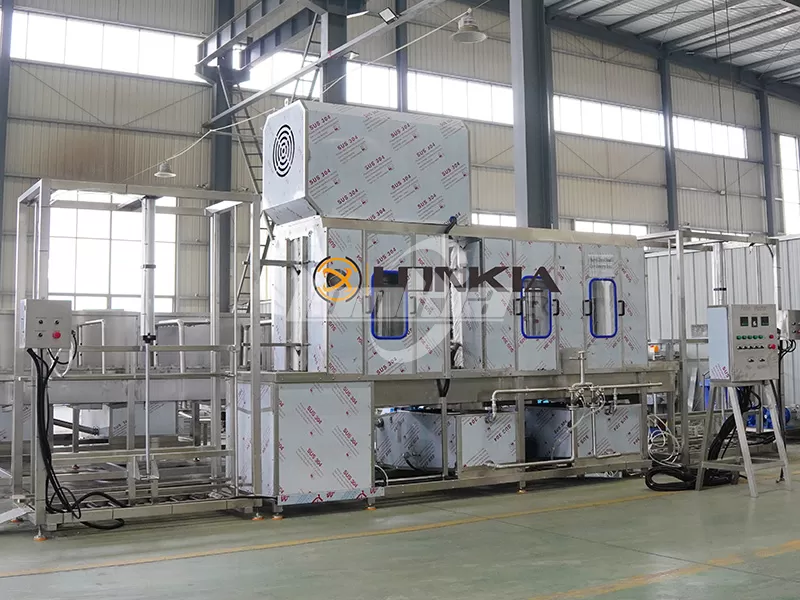
How to Select the Appropriate Washing Speed Based on Production Needs?
When selecting plastic pallet washer, companies should calculate their needs based on the number of pallets to be processed daily.
For example:
- If only a small number of reusable pallets need to be cleaned daily, focus on the equipment's flexibility and ease of operation;
- If a large volume of pallets needs to be processed daily, choose continuous-conveyor equipment to increase overall throughput;
- For the food industry, it is also necessary to consider whether cleaning, rinsing, and drying can be completed continuously.
Professional pallet cleaning machines can be configured based on the customer's pallet dimensions, contamination levels, and production capacity requirements, ensuring that the equipment's operating speed aligns with the production process.
Why Do Automated Pallet Cleaning Machines Improve Efficiency?
Traditional manual cleaning methods require manual handling, rinsing, scrubbing, and air-drying, and the processing time per pallet is easily affected by operator performance.
In contrast, automatic pallet cleaning equipment uses a conveyor system to automatically handle pallet feeding, cleaning, and output, maintaining a consistent cleaning cycle. Lonkia's pallet cleaning solutions prioritize equipment design and cleaning performance, helping customers achieve a more stable pallet processing workflow through automation.
Additionally, the pallet cleaning machine features a modular design, allowing customers to adjust the cleaning, rinsing, and drying configurations based on their actual production needs, ensuring the equipment better meets the requirements of different facilities.
Summary
The time required to clean a single pallet is merely a reference metric when purchasing a pallet washer. For actual manufacturing companies, the following factors are more critical:
- Whether pallets can be cleaned thoroughly;
- Whether the cleaning results are consistent;
- Whether the equipment can operate continuously;
- Whether maintenance is convenient;
- Whether it integrates with existing production processes.
A suitable pallet cleaning machine should strike a balance between cleaning efficiency, equipment stability, and actual production needs. By selecting the right equipment configuration, companies can establish a more stable pallet cleaning cycle and improve overall production management efficiency.
