
In modern catering and central kitchen environments, a highly efficient and reliable industrial dishwashing machine is essential for ensuring smooth operations. For hotels, school cafeterias, restaurant chains, or large dining establishments that handle substantial volumes of tableware, understanding the production capacity of industrial dishwashers is crucial. This article uses the Lonkia industrial dishwashing machine as an example to analyze its capacity performance and guide the selection of suitable equipment.
🧰 Key Factors Affecting Industrial Dishwashing Machine Capacity
🔹 (1) Conveyor Speed and Number of Stages
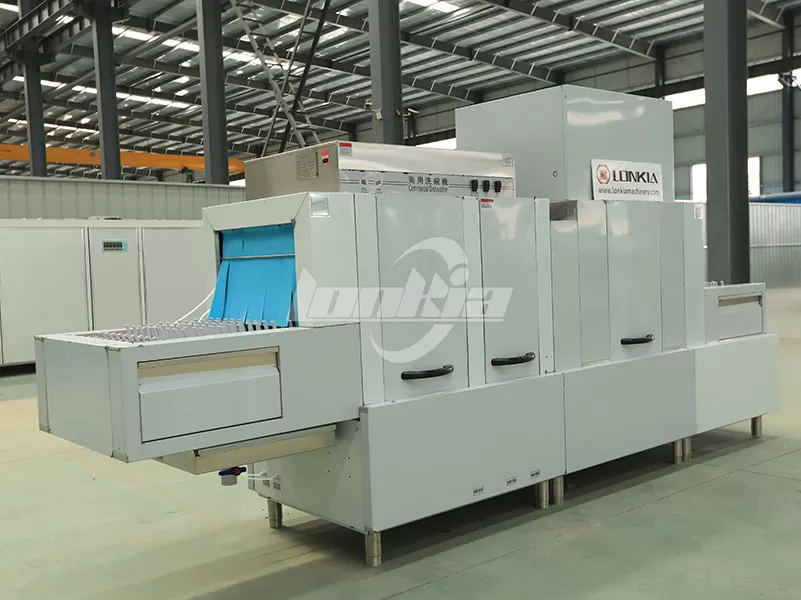
Capacity is directly influenced by conveyor belt speed and the number of wash stages. A multi-stage design enables simultaneous pre-wash, main wash, and rinse cycles, with each stage independently optimized to increase hourly throughput. Customers can select conveyor belts of appropriate length and stage count based on plant size.
🔹(2) Utensil Size and Arrangement
Oversized utensils or densely stacked items reduce washing efficiency. Proper arrangement maximizes spray system coverage, ensuring thorough cleaning of each piece while boosting throughput.
🔹(3) Water Temperature and Rinse Pressure
High-temperature rinsing and powerful spray jets not only guarantee hygiene standards but also reduce the need for rewashing, indirectly boosting hourly output. The Lonkia conveyor type dishwasher's high-temperature multi-stage rinse system effectively sterilizes and disinfects, balancing cleanliness and productivity.
💡 How to Select Capacity Based on Operational Needs?
When selecting a conveyor type dishwasher machine, consider the required capacity based on your daily dish volume, peak service times, and available kitchen space. Lonkia offers customizable solutions—including conveyor length, power configuration, and stage design—to flexibly accommodate diverse food service operations.
For example:
- Medium-sized restaurants: Handling 1,000–2,000 pieces daily. Opt for a standard-length conveyor belt to save space while meeting requirements.
- Large cafeterias or hotels: Processing over 5,000 pieces daily. Require multi-stage, extended conveyor belts and high-power washing systems to ensure smooth operation during peak hours.
✳️ Advantages of High Capacity
- Labor cost savings: Automated dishwashing reduces manual labor, allowing staff to focus on other tasks.
- Enhanced washing efficiency: Continuous operation minimizes downtime, ensuring utensils are always available.
- Consistent cleaning quality: High capacity is paired with standardized washing, ensuring every utensil meets hygiene standards.
- Lower operating costs: Optimized water, electricity, and detergent usage improve overall cost-effectiveness.
📌 Conclusion
For kitchen operators prioritizing high efficiency, consistent output, and long-term reliability, industrial dishwashing machines—particularly conveyor-belt models—are indispensable core equipment. Lonkia tunnel dishwashers not only deliver high throughput and user-friendly operation but also provide customized solutions tailored to diverse kitchen needs, ensuring customers achieve maximum return on their equipment investment.
