
In industries such as food processing, meat processing, seafood, baking, and central kitchens, the cleaning efficiency of reusable containers directly impacts production efficiency and product safety. When selecting a crate washer, many factories prioritize one key question: What return on investment will this machine deliver?
This article evaluates the true value of investing in a high-quality crate cleaning machine through dimensions including performance, cost, maintenance, and long-term benefits.
🌊 Sustained Production Returns from Efficient Cleaning Capabilities
A premium crate washer must first deliver stable, high-efficiency cleaning performance.
High-quality equipment significantly boosts productivity through:
- Multi-stage spray structure: High-pressure hot water stage, alkaline water stage, and rinse stage achieve thorough cleaning in one pass.
- Powerful circulation system: Ensures uniform rinsing across every container surface with zero cleaning blind spots.
- Adjustable conveyor speed: Flexibly adapts to production rhythms based on output volume.
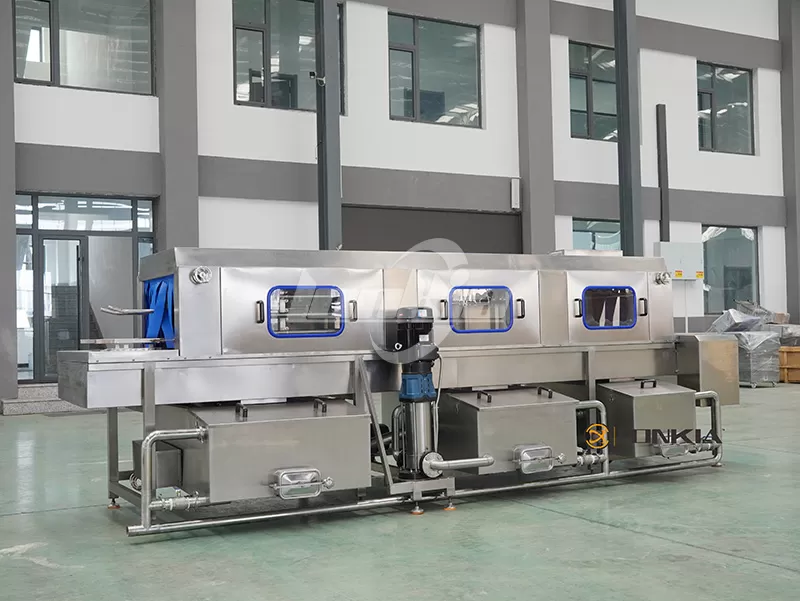
Lonkia's crate washing machines, for instance, optimize spray angles and pump power to reliably accommodate high-load production demands.
For factories operating under tight production schedules, sustained output represents one of the most tangible returns on investment.
💧 Water- and Energy-Saving Design Reduces Long-Term Operating Costs
Many clients overlook actual water, electricity, and labor costs during investment budgeting.
High-quality crate washer machinery excels precisely in these areas:
- Recirculating water filtration system: Extends water usage cycles, significantly reducing consumption.
- Heat recovery structure: Reduces heating time and lowers energy expenditure.
- High automation: Minimizes manual intervention and reduces labor costs.
If your factory cleans hundreds to thousands of containers daily, these savings translate into substantial returns within a year.
⚙️ Maintenance benefits from structural stability
Common questions when investing in crate washing equipment include:
Is the machine prone to breakdowns? Is maintenance troublesome? Are spare parts easy to replace?
Premium crate washers typically feature these structural characteristics:
- Entire unit constructed from food-grade stainless steel, resistant to corrosion and cleaning agents.
- Modular design for easy disassembly, cleaning, and maintenance.
- Advanced pump and spray systems minimize clogging and wear.
- Stable, reliable electrical control systems ensure prolonged continuous operation.
Reduced downtime translates to higher production efficiency—a critical factor influencing ROI.
🔍 Automation and Customization Enhance Practical Value
Each factory has unique container dimensions, cleaning requirements, and capacity demands.
Therefore, customers often focus on:
- Can it accommodate multiple container sizes?
- Can cleaning programs be adjusted based on soiling levels?
- Is integration with existing production lines supported?
High-quality crate washers typically offer:
- Adjustable conveyor belts and guides to accommodate varying container sizes
- Independent temperature control systems
- Multi-stage pressure adjustment
- Interconnectivity with dryers, air dryers, and circulation systems
These practical features significantly enhance equipment utility, making the investment more sustainable over the long term.
✔️ Summary: A high-quality container washer is a key investment for competitive advantage
Selecting a crate washer with stable performance, reliable construction, energy efficiency, and production line compatibility not only boosts factory cleaning efficiency but also delivers substantial long-term returns.
If you seek solutions designed for sustained operation in high-intensity production environments, premium equipment maximizes your investment value.
Lonkia's crate cleaning machines exemplify this approach—engineered for real-world production demands, they balance cleaning quality with operational costs to deliver consistent ROI for your facility.
