
In the food processing, central kitchen, cold chain warehousing, seafood processing, and logistics industries, the hygiene management of pallets is receiving increasing attention. If large numbers of reusable pallets are not thoroughly cleaned, they can easily retain grease, dirt, water stains, and bacteria, which not only affects the production environment but also complicates subsequent transportation and warehousing management.
Compared to traditional manual washing methods, modern pallet washer machines have achieved continuous, automated operation. Through high-pressure spraying, hot water circulation, automatic conveyance, and air-drying systems, the equipment thoroughly cleans pallets, helping businesses improve turnover efficiency and hygiene standards. For factories requiring long-term, stable operation, automatic pallet washing machines are gradually becoming essential equipment for standardized production.
Overall Workflow of Pallet Washer Machines
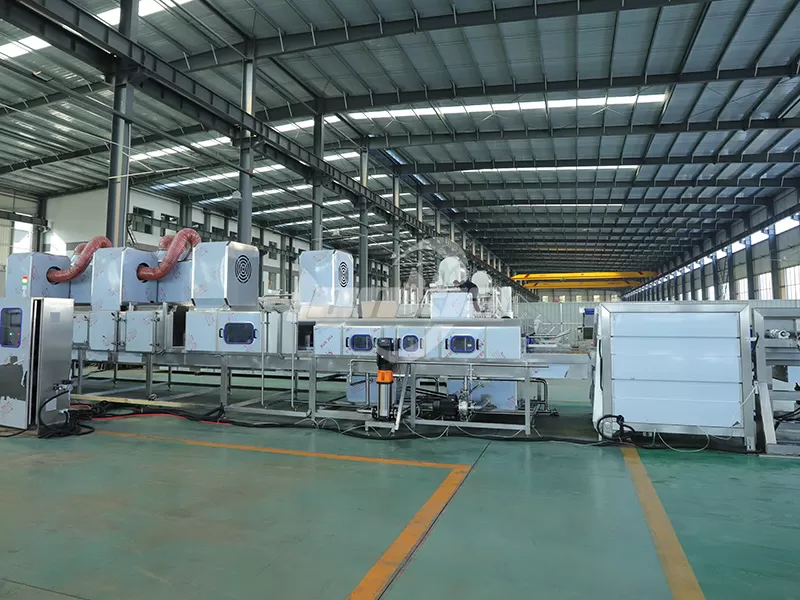
Modern pallet washing machines typically employ a continuous conveyor structure. Once pallets enter the machine, they sequentially pass through pre-rinse, main wash, rinse, and drying zones, with the entire process completed automatically. The equipment operates stably and can accommodate continuous batch cleaning requirements.
The automatic conveyor system maintains a consistent operational rhythm, reducing the need for manual handling. The PLC control system adjusts conveyor speed, water temperature, and spray pressure, allowing the equipment to adapt to pallets with varying degrees of contamination.
Pre-Rinse System Rapidly Removes Surface Contaminants
Upon entering the pallet cleaning equipment, pallets first pass through the pre-rinse zone. High-pressure nozzles perform an initial rinse to remove dirt, debris, and surface contaminants from the pallet surface. This step reduces the workload on the subsequent main wash zone while improving overall cleaning efficiency.
In the meat processing, seafood processing, and condiment industries, pallet surfaces often retain significant amounts of grease and stains; therefore, the pre-wash stage effectively reduces the pressure on the subsequent deep-cleaning process.
Modern pallet washer machines typically employ a multi-angle spray design, ensuring that the top, bottom, and edge areas of the pallets are evenly rinsed, thereby preventing cleaning blind spots.
High-Pressure Main Wash Enhances Pallet Cleanliness
After the pre-rinse, the pallets enter the main wash zone. This is the core component of the pallet washing machine.
The equipment uses hot water at high temperatures and a high-pressure spray system to thoroughly clean the pallets. The high temperature softens grease, while the high-pressure water stream quickly removes stubborn residues. Some models are also equipped with a recirculating filtration system that continuously filters out impurities, improving water recycling efficiency.
For food processing plants with stringent hygiene requirements, stable water temperature and spray pressure are critical. Automated equipment ensures consistent cleaning standards, eliminating variations in cleaning effectiveness caused by inconsistent manual operation.
Lonkia pallet washing machines feature a multi-row nozzle configuration that covers the pallet from multiple angles. They also support customization for different pallet sizes, making them ideal for continuous production needs.
Rinsing System Minimizes Residue Issues
After the main wash cycle, the pallets enter the rinse zone. This stage primarily uses clean water to further rinse the pallet surfaces, reducing residual stains and cleaning solution residue.
For the food industry and cold chain logistics, the rinse step further elevates pallet hygiene standards while minimizing the risk of secondary contamination.
Some pallet washing machines also include a dedicated rinse spray zone, ensuring pallets remain in a cleaner state before entering the drying process.
Automatic Air-Drying System Improves Turnover Efficiency
After washing is complete, the pallets enter the air-drying zone. A powerful air-blowing system rapidly removes moisture from the pallet surfaces, minimizing the impact of residual dampness while facilitating subsequent stacking and transportation.
For factories requiring rapid pallet turnover, the automatic drying system effectively improves overall operational efficiency. Compared to natural air-drying, automatic air-drying reduces waiting time, allowing pallets to be returned to production faster.
Some pallet washer machines also support hot-air drying, ensuring consistent drying performance even in low-temperature environments.
Why More and More Factories Are Choosing Pallet Washers?
As production standards continue to rise, traditional manual cleaning can no longer meet the demands of continuous production. Modern pallet washer machines help businesses improve pallet cleaning efficiency, reduce manual labor, enhance hygiene consistency, and alleviate management pressures during prolonged operations.
Lonkia continues to provide automated pallet washing solutions for the food processing, logistics and warehousing, and central kitchen industries. The equipment supports customization for a wide range of pallet sizes, and the washing and drying systems can be configured to suit different production processes, helping businesses establish more stable and efficient washing workflows.
