
In the food processing industry, plastic crates come into daily contact with materials such as meat, seafood, fruits, vegetables, and prepared foods. If not cleaned thoroughly, they can easily accumulate grease residue, odors, and bacterial contamination, which directly affects production hygiene and product quality. As a result, an increasing number of factories are adopting plastic crate washers to replace traditional manual cleaning methods. This article will provide a detailed overview of the complete workflow of the plastic crate washer to help customers better understand the equipment.
Basic Operating Principle of the Plastic Crate Washer
The plastic crate washer primarily uses a conveyor system, high-pressure spray system, hot water circulation system, and filtration system to perform continuous, automatic cleaning of the crates.
During operation, the crates are automatically fed into the washing chamber via a conveyor chain. They pass through different functional zones to complete processes such as pre-rinsing, main washing, and rinsing, before finally exiting as clean crates, enabling continuous operation.
Compared to manual cleaning, the crate washing equipment not only offers higher efficiency but also maintains consistent cleaning standards.
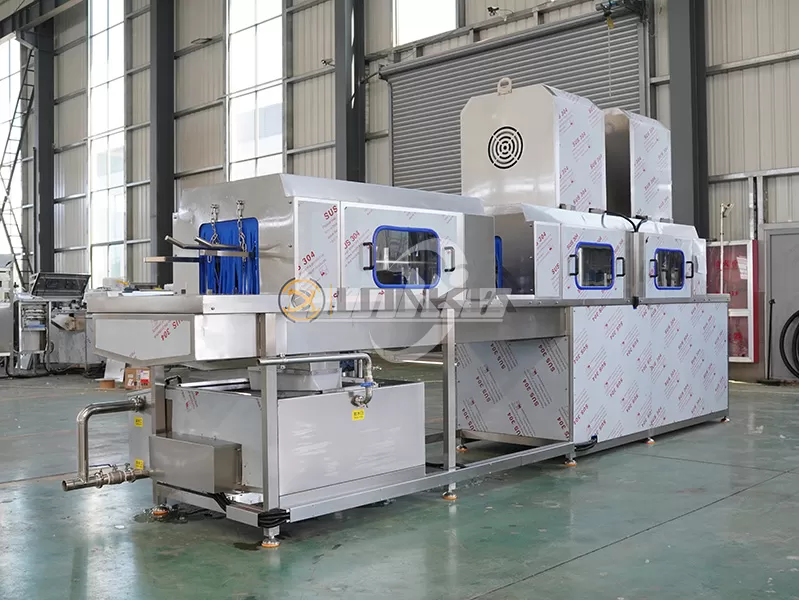
Workflow of the Crate Washer Machine
Step 1: Automatic Crate Conveyance
Reusable crates first enter the equipment via a conveyor chain.
To accommodate crates of various sizes, the equipment is typically equipped with adjustable guide rails and a stable conveying structure to prevent issues such as jamming or tipping during operation.
For example, Lonkia's industrial crate washing machine customizes the conveyor width and spray angles based on the dimensions of the customer's crates, ensuring more stable equipment operation.
Step 2: Pre-Rinse to Remove Surface Contaminants
Upon entering the washing zone, the industrial crate washer first performs a pre-rinse.
This stage primarily uses recirculating water to initially flush away residue, mud, and debris from the crate surfaces, reducing contamination pressure in the subsequent main washing zone.
For meat processing plants, pre-rinsing effectively reduces grease and protein residues, improving overall cleaning efficiency.
Step 3: High-Pressure Hot Water Deep Cleaning
This is the core function of crate washing machines.
The equipment is equipped with multiple sets of high-pressure nozzles that spray the crates from various angles to provide comprehensive coverage. The high-temperature hot water rapidly breaks down grease and stubborn residues, ensuring thorough cleaning of the crates' inner walls, corners, and bottoms.
Many customers are particularly concerned about cleaning hard-to-reach areas, making nozzle layout and water pressure design critical.
High-quality crate cleaning equipment typically features:
- Multi-angle high-pressure spraying
- Removable nozzle design
- Recirculating filtration tank
- Stable temperature control system
These configurations directly impact the final cleaning results.
Step 4: Clear Water Rinsing
After the main cleaning cycle, the equipment enters the rinsing phase.
This process primarily uses relatively clean water to rinse the crates again, reducing detergent residue and further enhancing hygiene standards.
For the food processing industry, this step is particularly important, especially in sectors such as prepared foods, fresh-cut vegetables, and seafood.
Step 5: Crate Discharge and Subsequent Use
Once cleaning is complete, the crates are automatically discharged and can proceed directly to the next production stage.
Some customers also incorporate an air-drying system to quickly remove water from the crate surfaces, reducing water accumulation issues during subsequent stacking.
The continuous design allows the plastic crate washer to integrate directly with existing production lines, reducing manual handling and improving overall production efficiency.
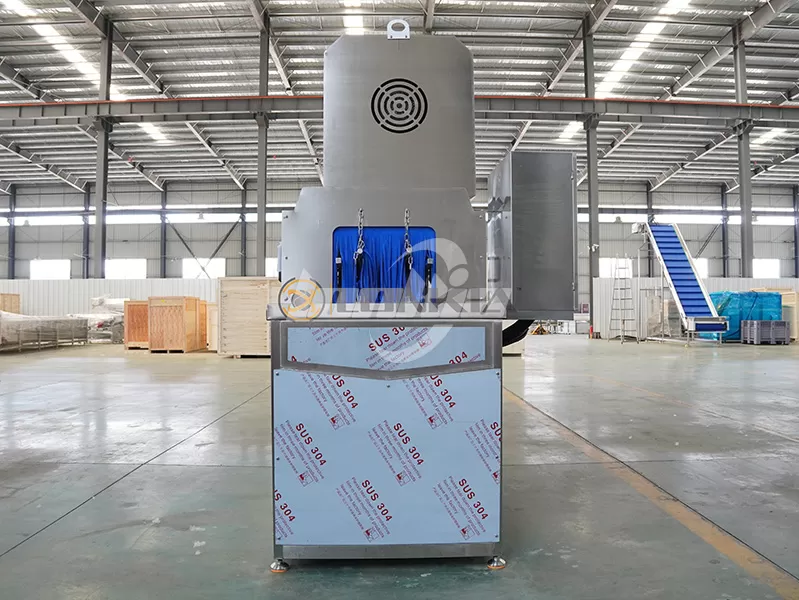
Why Are More and More Factories Choosing the Industrial Crate Washer?
As food factories impose increasingly stringent hygiene standards, traditional manual washing struggles to meet the demands of continuous production.
The plastic crate washer not only improves cleaning efficiency but also addresses the following issues:
- Inconsistent cleaning standards
- High labor costs
- Slow cleaning speed
- Severe odors in return crates
- Difficulty in thoroughly removing grease
For factories requiring long-term continuous production, automated cleaning equipment has become a crucial component of improving production management.
Conclusion
The core of the industrial crate washing machine lies in achieving continuous, stable, and high-standard cleaning of return crates through stable conveying, high-pressure spraying, hot water circulation, and a rational structural design.
For food processing companies, selecting equipment with a well-designed structure, stable operation, and a mature spray system directly impacts subsequent production efficiency and hygiene management outcomes.
During the actual procurement process, it is recommended to focus on the equipment's spray structure, water circulation system, materials, and conveyor stability, as these are the key factors that truly determine the user experience.
