
In the beverage, condiment, dairy, and food processing industries, glass bottles must be kept clean before filling. If dust, debris, oil residue, or other impurities remain inside the bottles, it will not only affect product quality but may also pose a risk of contamination to the filled products. Therefore, an increasing number of companies are adopting glass bottle washer machines to replace traditional manual cleaning methods in order to achieve more consistent and efficient cleaning results.
So, how exactly does a glass bottle washing machine thoroughly remove residues from inside the bottles?
What Are the Common Types of Residues Found in Glass Bottles?
In actual production, glass bottles may contain various contaminants, including:
- Dust and particulate matter accumulated during storage
- Impurities that entered the bottles during transportation
- Oil stains or foreign objects adhering to the bottle walls
- Debris from old label residues
- Deposits formed during prolonged storage
These residues are often hidden at the bottom, shoulder, or mouth of the bottle and are difficult to remove completely through simple rinsing alone.
The High-Pressure Spray System Is the Core of the Cleaning Process
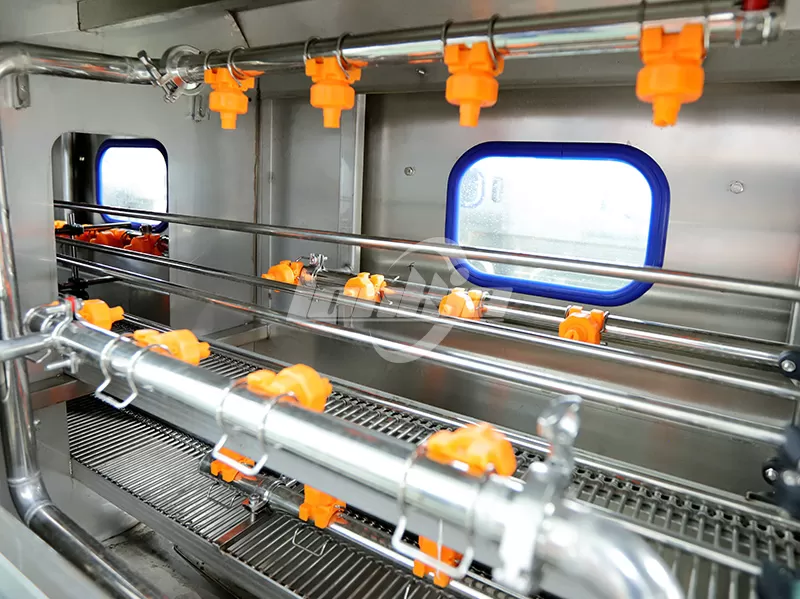
The high-pressure spray system is the most critical component of a glass bottle washer machine.
During operation, glass bottles are automatically fed into the washing area via a conveyor system, where specialized nozzles direct high-pressure water jets directly into the bottles. The high-speed water flow covers the bottom, sides, and mouth of the bottles, quickly dislodging adhered dust, impurities, and residues.
Compared to manual rinsing, high-pressure spraying offers the following advantages:
- Stable water pressure
- More uniform cleaning coverage
- Fewer cleaning blind spots
- Improved cleaning consistency
For food manufacturers, this standardized cleaning method effectively reduces quality fluctuations caused by human error.
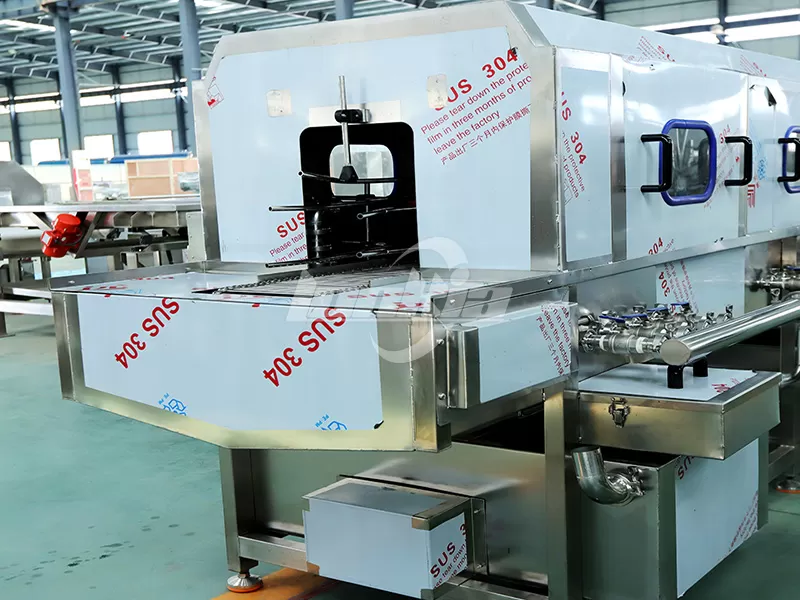
Multi-Station Cleaning Enhances Cleaning Effectiveness
Modern glass bottle washing machines typically employ a multi-station continuous cleaning design.
The entire process generally includes:
- Pre-rinse: Recirculated water is used to remove larger particles, impurities, and dust.
- Deep cleaning: High-pressure nozzles rinse the interior of the bottles from multiple angles to thoroughly remove adhered residues.
- Clean Water Rinse: A secondary rinse with clean water is performed inside the bottles to prevent any residual cleaning solution or impurities.
- Disinfection: Some equipment can be equipped with a disinfection module to further enhance hygiene standards.
By completing the cleaning process continuously through multiple stages, the final level of cleanliness can be significantly improved.
Professional Nozzle Design Reduces Cleaning Dead Zones
Many customers' primary concern is that the bottom and shoulder areas of the bottles cannot be cleaned thoroughly.
To address this issue, the glass and bottle washer typically employs a customized nozzle layout design. With optimized spray angles, the water flow fully covers every area inside the bottle, effectively removing residues.
For glass bottles of different sizes, the nozzle positions and conveyor structure can be adjusted to ensure consistent cleaning results.
Automated Control Ensures Stable Operation
The PLC control system centrally manages parameters such as cleaning time, water pressure, and conveyor speed.
Operators need only set the appropriate parameters, and the equipment will automatically complete the entire cleaning process.
This automated operation not only improves production efficiency but also ensures that every glass bottle meets the same cleaning standards, creating optimal conditions for subsequent filling processes.
Selecting the Right Equipment Is Key to Achieving Ideal Cleaning Results
For food and beverage manufacturers, the quality of glass bottle cleaning directly impacts product quality and production stability.
A high-quality glass bottle washer machine should feature high-pressure spraying, multi-stage cleaning, stable conveying, and automatic control. Lonkia's glass bottle washing equipment employs a continuous cleaning design and an optimized spray system, helping companies achieve efficient and stable bottle cleaning while providing reliable support for subsequent filling and packaging stages.
As the demand for automated production continues to rise, glass bottle washers have become an indispensable piece of equipment in modern production lines.
