
In applications across food processing, beverage, logistics, and other industries, industrial crate washers serve as the core equipment for cleaning reusable crates. For procurement decision-makers, "What is the equipment's processing capacity?" ranks among the most common search queries. However, focusing solely on capacity figures does not guarantee equipment compatibility with production lines. This article will thoroughly analyze the key factors influencing processing capacity, helping users more accurately determine their specific production needs—a fundamental understanding essential for professional equipment selection.
Understanding Industrial Crate Washer Throughput
Throughput is typically measured in "crates per hour." Yet this metric is not a simple parameter; it results from the combined effects of multiple design factors:
- Conveyor belt speed and cycle time
- Number and length of wash sections
- Spray coverage efficiency
- Single Wash Cycle Configuration
Therefore, the capacity stated on equipment nameplates is typically a theoretical value measured under ideal conditions. Actual performance may vary slightly after production line commissioning.
How Capacity Affects Production Rhythm
In continuous and automated production environments, crate cleaning machines typically operate not in isolation but as nodes within production lines. If the washer's throughput falls below the production cycle rate, the following issues arise:
- Crate backlogs
- Increased manual intervention
- Rising costs and process bottleneck risks
Conversely, if throughput significantly exceeds demand, the equipment's actual load decreases, potentially leading to unstable operation or resource waste.
The optimal strategy is to select a throughput capacity that matches the production cycle rate, rather than simply pursuing higher numbers.
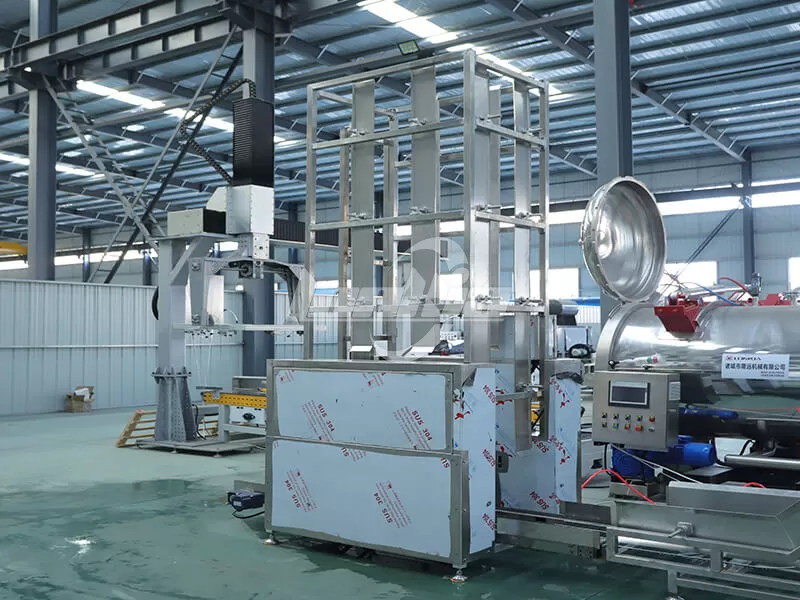
Key Factors Affecting Crate Cleaning Machine Throughput
Throughput is not determined by a single parameter but is influenced by a combination of the following design factors:
- Conveyor System Design: A stable chain or belt system ensures smooth crate movement. Irregular rhythms cause stagnation in the cleaning section, impacting overall throughput.
- Spray System and Coverage Efficiency: The number of spray nozzles, spray angles, and water pressure determine cleaning effectiveness per crate. Optimal layout enhances cleaning efficiency more than simply increasing speed.
- Washing Section Length: More sections extend cleaning time, but excessive length may reduce cycle time. Therefore, the crate washer design must align with actual soil types and cleaning requirements.
How to Determine Suitable Throughput?
Before selecting crate washing equipment, base decisions on actual operational data rather than experience. Recommended steps:
- Track actual daily/hourly turnover of baskets
- Evaluate basket types and contamination levels
- Define cleaning quality requirements (e.g., need for a rinse section)
- Cross-reference with equipment design parameters
For example, high-frequency production lines require throughput matching the production pace to prevent cleaning from becoming a bottleneck.
Summary
Understanding the throughput capacity of industrial crate washers involves more than examining a single figure. It requires a clear grasp of how equipment design aligns with production line rhythms. Ideal throughput should be determined based on real-world data assessment, cleaning requirements, and process cycle times.
For further insights into throughput capacity configurations and structural solutions for industrial washing machines, contact the Lonkia team to receive equipment recommendations tailored to your specific operational conditions.
