
In modern food processing, central kitchens, logistics warehousing, and other industries, industrial tray washing machines have become essential equipment for ensuring production efficiency and hygiene standards. As production scales expand and industry demands for food safety continue to rise, traditional manual tray cleaning methods can no longer meet enterprises' requirements for efficient, stable, and hygienic cleaning. Today, we will provide a detailed overview of the core components and working principles of tray washers, helping you understand precisely why they have become vital equipment in modern industrial settings.
What is an Industrial Tray Washing Machine?
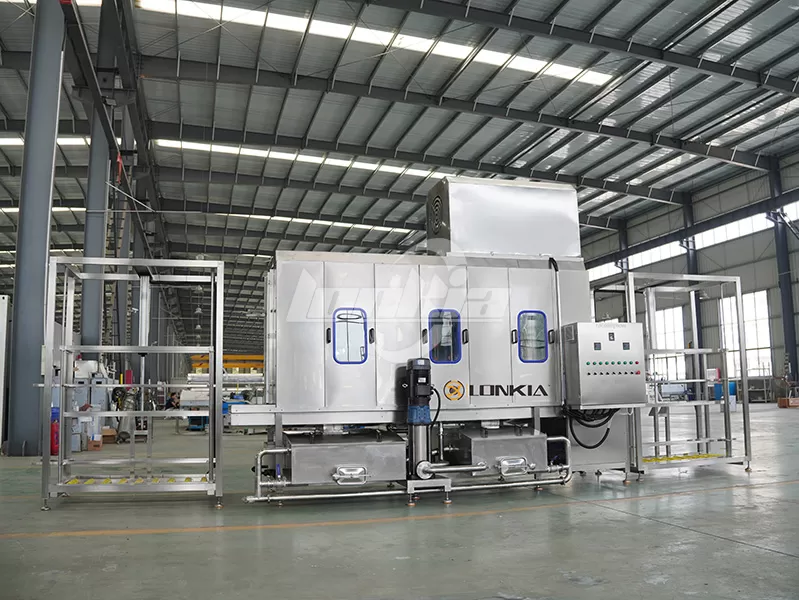
An industrial tray washing machine is an automated cleaning system specifically designed to clean various material carriers such as trays, pallets, plastic crates, and tray boxes. Utilizing technologies like automatic conveyance, high-pressure spraying, recirculating filtration, and drying systems, it rapidly removes grease, residues, and microorganisms from tray surfaces, achieving high-standard cleaning and disinfection. This tray washing equipment is widely deployed in food factories, central kitchens, beverage production lines, cold chain logistics centers, and large distribution warehouses.
Core Components of Tray Washers
Understanding the operational principles of tray cleaning machines hinges on familiarizing oneself with their core components:
■ Automatic Conveyor System
Pallets are automatically fed into the cleaning zone via conveyor belts, eliminating manual handling, reducing labor intensity, and enhancing cleaning consistency.

■ Spray and High-Pressure Water System
Multiple high-pressure nozzles inside the tray washing machine deliver high-velocity water streams at precise angles to thoroughly rinse pallets, effectively removing grease, starch residues, and food particles.
■ Recirculating Filtration System
Washing water circulates through a multi-stage filtration system that captures large contaminants, enhancing cleaning efficiency while reducing water consumption.
■ Control System
The equipment features a Programmable Logic Controller (PLC) or Human-Machine Interface (HMI) for intuitive operation. Cleaning parameters like speed, pressure, and water temperature can be adjusted based on pallet contamination levels.
■ Drying Module
Most tray washers include a drying function. High-efficiency fans or hot air systems blow away surface moisture, enabling cleaned pallets to proceed directly to subsequent processes or transportation.
Detailed Explanation of Tray Cleaning Machine Operation
The operational principle of industrial tray washing machines can be divided into several key stages based on the cleaning process:
- Automatic Feeding and Pre-Rinsing: Upon entering the machine, pallets first pass through an initial spray zone where high-pressure water streams rapidly remove large visible contaminants.
- Main Cleaning Stage: Upon entering the main cleaning zone, hot water combined with detergent penetrates deep into the pallet surface and grooves via high-pressure nozzles, effectively breaking down grease and residues with maximum cleaning power.
- Rinsing and Secondary Cleaning: Pallets proceed to the clear water rinse zone, where residual detergent and impurities are removed to ensure consistent and reliable cleaning results.
- Drying and Output: Finally, powerful air drying or hot air drying ensures no water marks remain on the pallet surface, enabling immediate use in subsequent production or storage.
Why Do Customers Need Industrial Plastic Tray Washing Machines?
Enhance Cleaning Consistency and Standardization
Compared to traditional manual cleaning, plastic tray washing machines guarantee each pallet undergoes a standardized cleaning process unaffected by operator variation. This is particularly suitable for food production environments with high hygiene requirements.
Significantly Boost Production Efficiency
Automated systems enable continuous operation with processing speeds that far exceed those of manual methods. In high-capacity work environments, businesses can rapidly complete large-scale tray cleaning tasks.
Reduce Labor Dependency and Optimize Process Layout
Implementing tray washers decreases reliance on cleaning staff, freeing human resources for higher-value roles while improving overall production line workflow.
Final Thoughts
For businesses requiring frequent tray cleaning in production lines, investing in an industrial tray washing machine significantly boosts efficiency, ensures consistent cleanliness, and reduces operational costs. When evaluating cleaning equipment options, consider experienced tray washing machines manufacturers like Lonkia, which offer customized solutions and comprehensive after-sales support to help factories achieve stable, high-efficiency cleaning processes.
