
When selecting a crates washing machine, the cleaning water used is one of the most critical factors for many food processing plants. Material residue varies across different facilities, and choosing between hot or cold water washing directly impacts cleaning effectiveness, operating costs, and overall equipment performance. Understanding the differences between these two methods helps customers select the solution best suited to their production needs.
Hot Water Cleaning: More Effective for Grease and Protein Residues
In industries such as meat, poultry, and seafood processing, trays or crates often carry grease, blood, and protein residues.
Hot water cleaning offers distinct advantages in crates washing machines:
- High temperatures break down grease faster for more thorough cleaning
- Hot water enhances sterilization capabilities, making it easier for crates to meet hygiene standards
- Reduces cleaning time for stubborn stains, improving efficiency
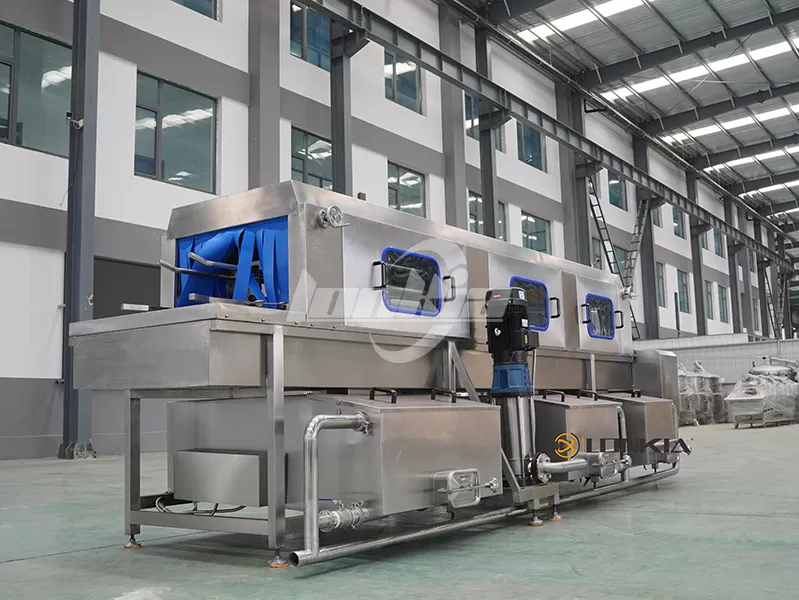
For instance, in high-standard food factories, Lonkia crate washer is often configured with a hot water washing section to ensure crates are cleaner upon discharge, minimizing the risk of secondary contamination.
Cold Water Washing: Suitable for General Dust, Sand, and Light Soiling
For vegetable, fruit, and packaging enterprises, pallet surfaces typically carry sand, ordinary dust, or minor stains.
In such cases, cold water washing adequately meets daily hygiene requirements:
- Lower operating costs with no heating energy consumption
- Simpler cleaning systems for easier maintenance
- Cold water recirculation with filtration maintains consistent performance
For facilities with lightly soiled crates and stable washing volumes, cold water solutions effectively control costs.
How to Select the Optimal Cleaning Method for Your Plant?
When choosing a crate cleaning machine, consider these factors:
- Soil type: Grease → Hot water; Light soiling → Cold water
- Sanitation requirements: Meat/seafood processing → Hot water ensures greater reliability
- Budget and energy consumption: Seeking lower operating costs → Cold water solution is more economical
- Cleaning speed requirements: Aiming to reduce cleaning time or increase daily output → Hot water recommended
For facilities handling both light soiling and grease contamination, a multi-stage cleaning structure combining hot and cold water can balance effectiveness and efficiency.
Summary
Choosing between hot or cold water has no absolute standard; it requires comprehensive evaluation based on industry characteristics, contamination levels, and cost requirements. Appropriate water temperature significantly enhances the cleaning effectiveness of crates washing machines while directly impacting production efficiency and hygiene safety. If you need to select the most suitable configuration for your facility, Lonkia can provide professional solutions tailored to crate dimensions, contamination types, and production capacity demands.
