
In modern food and beverage production lines, clean, contamination-free glass bottles are the first step in ensuring product quality. An efficient glass bottle washing machine not only lays the foundation for subsequent filling and capping processes but also directly impacts production efficiency, product quality, and food safety standards. This article will analyze the core structure and working principles of glass bottle washing machines, helping customers understand why they are a critical piece of equipment in production lines.
Basic Structure of Glass Bottle Washing Machines
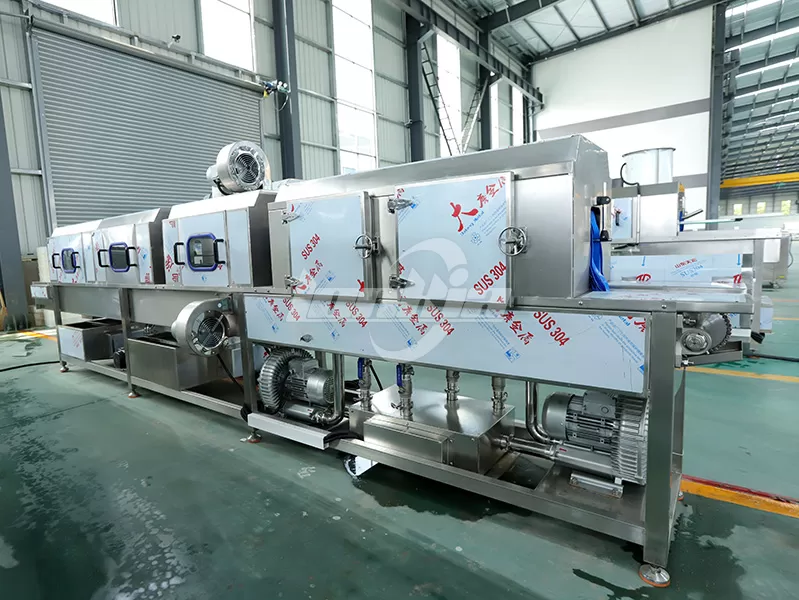
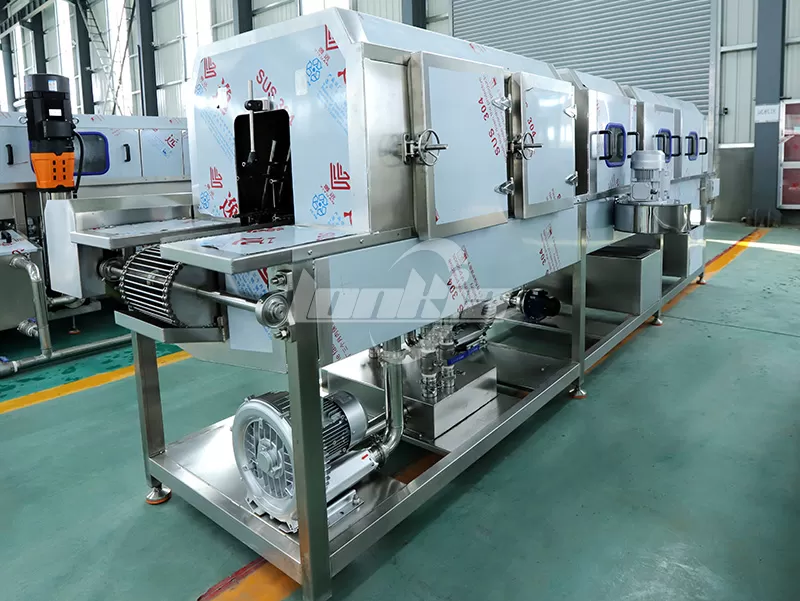
A standard glass bottle washer machine primarily consists of the following components:
- Conveyor System: Bottles enter the bottle washing equipment via a conveyor belt and are positioned within the washing unit. The conveyor structure ensures stable, non-shaking transport throughout the entire cleaning process.
- Spray Washing System: Equipped with multiple high-pressure nozzles, it simultaneously performs circulating spray washing on both the interior and exterior surfaces to remove contaminants and residues. The spray water undergoes recirculation and filtration, enabling efficient reuse of the cleaning medium.
- Control System: PLC control or touchscreen interface manages the entire washing cycle, spray duration, water pressure, and other parameters, ensuring each batch of bottles undergoes standardized processing.
These modules work in concert to deliver a continuous, stable, and controllable cleaning process.
Working Principle of Glass Bottle Washing Machines
The core functionality of a high-quality glass bottle washing machine lies in its rinsing principle and logistics organization:
1. Bottle Infeed and Positioning
Bottles enter the glass and bottle washer via a conveyor line. This process prevents bottles from shifting or becoming misaligned under high-pressure water streams.
2. Multi-Stage Spray Cleaning
Within the primary cleaning chamber, high-pressure nozzles deliver cyclical spray streams to both the interior and exterior surfaces, dislodging contaminants and residues. Spray intensity and duration are precisely controlled to ensure every bottle meets cleaning standards.
3. Internal Rinsing and Air Blowing
Some models incorporate high-pressure air blowing during cleaning to remove residual water droplets or fine particles, leaving bottles drier and ready for subsequent processes.
4. Cleaning Cycle and Drainage System
Spray water is collected, filtered, and returned to the tank for reuse, minimizing waste while maintaining consistent cleaning performance. The filtration system also prevents nozzle clogging, avoiding uneven cleaning results.
Value of Glass Bottle Washers to Production Lines
Understanding their operation highlights glass bottle washing machines' importance:
- Consistent, Quantifiable Cleaning Results: Automated spraying delivers greater stability and uniformity than manual washing, reducing human error and enhancing overall cleanliness.
- Reduced Breakage & Increased Efficiency: Precision spray design and conveying mechanisms minimize breakage risks, improving production line cycle stability.
- Labor and Management Cost Savings: Automated control reduces operator workload while minimizing quality issues from improper handling.
How to Evaluate a High-Quality Bottle Washing Machine?
From the customer's perspective, key indicators for assessing a glass bottle washer machine include:
- Rational Spray System Design: Nozzle layout, quantity, and pressure directly impact cleaning effectiveness.
- Stable Bottle Clamping and Conveying: Consistent bottle transport is fundamental to ensuring uniform cleaning results.
- Intelligent control system: Features like adjustable parameters, fault alerts, and automatic shutdown enhance equipment reliability.
Summary
An efficient glass bottle washing machine is not merely a "rinse-and-go" device. It achieves high-standard, consistent cleaning results through precision-engineered washing, conveying, and control systems. For businesses prioritizing product quality, production efficiency, and operational stability, understanding its working principles is a crucial step in selecting suitable equipment and optimizing production.
Lonkia's glass bottle washer machines deliver reliable cleaning solutions for food and beverage production lines through stable conveying design, advanced spray systems, and intelligent controls, making washing the solid foundation of automated production.
