
During the glass bottle washing process, many companies focus primarily on the cleaning capacity of the glass bottle washing machine, yet overlook an equally important step: bottle feeding. In fact, whether bottles can be arranged in a stable, continuous, and accurate manner before entering the washing machine directly impacts the efficiency and stability of the entire washing process.
Consequently, an increasing number of production lines are now installing bottle unscramblers before the glass bottle washing machine to achieve a fully automated process—from disorganized stacking to automatic sorting and continuous washing. Bottle unscramblers not only improve production efficiency but also effectively reduce issues such as bottle jams and overturned bottles, creating stable conditions for the subsequent washing process.
The Role of Bottle Unscramblers in Bottle Washing Production Lines
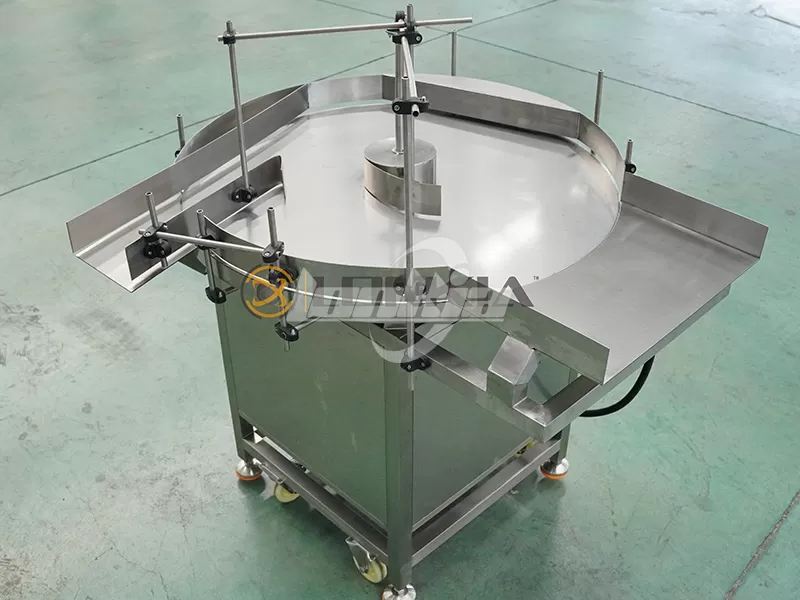
Glass bottles typically enter the production area in bulk, with bottle necks facing different directions and in a disorderly arrangement. If they enter the conveyor system directly, this can easily lead to bottle collisions, conveyor blockages, and positioning errors.
The primary functions of a bottle unscrambler are:
- Automatically organizing disordered glass bottles;
- Standardizing the orientation of bottle necks;
- Maintaining a stable conveying rhythm;
- Continuously feeding bottles to the washing machine;
- Reducing the workload of manual bottle arrangement.
After processing by the bottle sorter, glass bottles enter the glass bottle washing machine in an orderly manner according to the set orientation, creating optimal operating conditions for subsequent cleaning.
What Problems Might Arise Without a Bottle Unscrambler?
- Frequent bottle jams affecting production: When bottle orientations are inconsistent, bottles are prone to crossing or piling up during conveyance, leading to equipment shutdowns for troubleshooting.
- Unstable washing cycle: Glass bottle washers typically operate at a fixed cycle rate. If the bottle feed speed fluctuates, it will affect the performance of the spray system and gripping mechanism, thereby compromising overall cleaning quality.
- Increased labor costs: Without a bottle aligner, staff must be assigned to continuously reposition and adjust bottles, complicating production management.
- Increased risk of glass bottle breakage: Disorganized conveying can easily cause bottles to collide, particularly during high-speed operation, which may significantly increase the breakage rate of glass bottles.
How Does a Bottle Unscrambler Improve the Efficiency of the Glass Bottle Washer?
The greatest advantage of a bottle unscrambler is its ability to ensure a continuous and stable bottle supply.
When bottles enter the glass bottle washing machine in a uniform orientation, the equipment can maintain a stable operating rhythm. The spray system can accurately target the bottle mouth and body for cleaning, thereby improving overall cleaning effectiveness. Modern automated production lines commonly employ an integrated design linking the bottle aligner and the washing machine to achieve continuous bottle feeding and continuous cleaning.
For enterprises requiring long-term continuous production, the bottle aligner can effectively reduce the number of machine stoppages, improving equipment utilization and overall production capacity.
How do bottle unscramblers and Glass Bottle Washers Work Together?
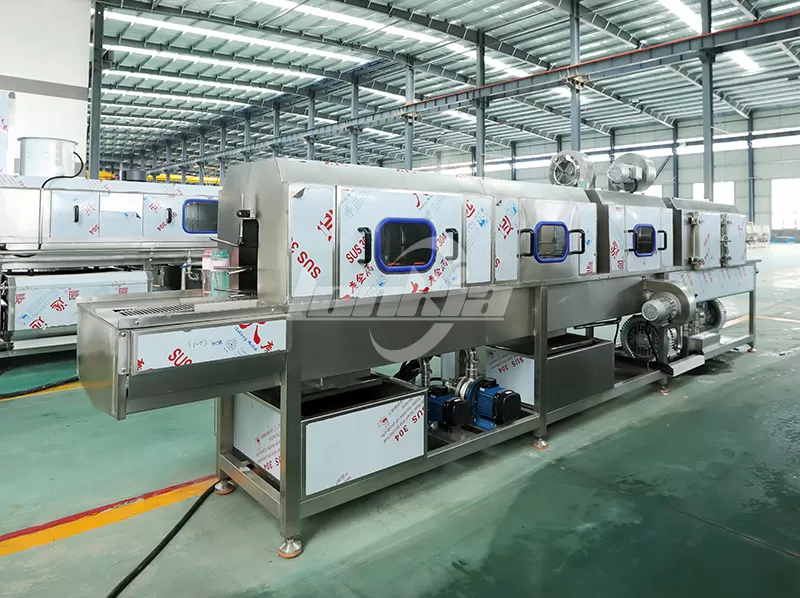
A complete glass bottle washing system typically includes:
- bottle unscrambler
- Conveyor system
- Glass Bottle Washing Machine
- Rinsing system
- Drying system
- Outfeed conveyor system
During production, the bottle sorter first sorts the bottles, then conveys them steadily into the glass bottle washer via a conveyor chain. The glass and bottle washer uses high-pressure spray nozzles to clean both the interior and exterior of the bottles. When necessary, rinsing and drying processes are added, and the system ultimately delivers clean bottles to the filling stage.
This continuous design significantly enhances the operational stability of the entire production line.
How to Select the Right Bottle Unscrambler?
When selecting a bottle sorter, it is recommended to focus on the following aspects:
- Bottle Type Compatibility: The equipment should be capable of handling glass bottles of different capacities and specifications.
- Conveyor Stability: A stable bottle feed rate ensures continuous operation of the bottle washer.
- Ease of Adjustment: Parameters should be quickly adjustable when changing bottle types to minimize downtime.
- Compatibility with the Bottle Washer: The bottle sorter's capacity should align with that of the bottle washer to prevent underfeeding or bottle pileups.
Conclusion
For modern glass bottle washing production lines, the bottle sorter is no longer a mere auxiliary piece of equipment but a critical component that impacts the efficiency of the entire line. By installing a bottle sorter upstream of the glass bottle washing machine, issues such as manual bottle placement, bottle jams, and unstable bottle supply can be effectively resolved, while simultaneously improving washing efficiency and equipment operational stability.
Lonkia offers customized solutions for bottle sorting machines paired with glass bottle washing machines to meet various bottle specifications and production capacity requirements, helping customers build more stable and efficient automated bottle washing systems. Please contact us to obtain an equipment solution tailored to your production needs.
